Sahil Jagtap
Writings LinkedIn GitHub Twitter Chat Video
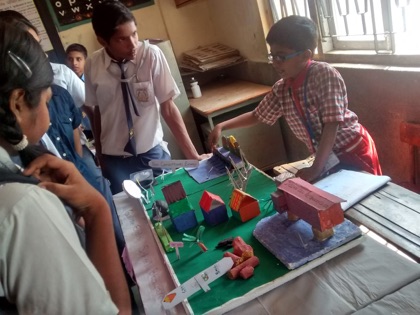
I'm an engineer and founder. Previously, I co-founded and built Airstitch (acquired) and created AgentBudget, an open-source library with 100k+ installs.
Currently making computer-use AI training cheaper with Drums: letting many independent RL rollouts share one underlying computer while keeping each attempt's changes isolated, so the same hardware runs several times more attempts. My work is developer tools and the infrastructure underneath them: sandboxes, snapshots, and the plumbing that lets a process keep running after the laptop that started it goes to sleep. Most of what I've built comes from hitting one of those problems myself and not finding a good answer.
I write about engineering, startups, and things I'm trying to understand. I always reply.
What I'm building (or built in the past)
Drums - infrastructure for making computer-use AI training cheaper and more efficient. Drums has gone through a few versions as I've gotten closer to the actual systems problem, so here are the checkpoints.
Now (Oct 2026): resource sharing for computer-use RL. Training a computer-use agent requires running enormous numbers of attempts inside real software environments. An agent might open Chrome, navigate a website, edit a document, fail, reset, and try again thousands or millions of times. These attempts need to be independent, but most of them repeatedly load the same operating system, applications, libraries, and starting state.
Today that isolation is usually provided with separate virtual machines or similar environments. Snapshots and copy-on-write already avoid some unnecessary duplication, but there is still a lot of repeated compute and memory across attempts that are doing nearly the same thing.
Drums is exploring a different architecture: let many independent training attempts share common underlying computer resources while keeping the changes made by each attempt isolated. Instead of treating every rollout as an entirely separate computer, share what can safely be shared and separate only what actually changes.
The goal is higher training throughput per machine and lower infrastructure cost. We're targeting 3–5x more computer-use training attempts on the same hardware, starting with macOS and eventually Linux and Windows. That's the target we're building toward, not a benchmark we've achieved yet.
Sep 2026: forkable computers for agents. The previous version of Drums was a snapshot, fork, and restore layer on top of existing virtualization. Snapshot a running computer, branch it into several independent copies, and let agents continue from the same state without rebuilding the environment each time. Working on this is what pushed us toward the deeper resource-sharing problem: if thousands of branches begin from almost the same computer, how much of that computer actually needs to exist thousands of times? I wrote up the thinking from that period in What is computer use, actually?, The three layers of agent persistence, and How to fork a computer.
Summer 2026: infrastructure for coding agents. Drums originally started as a cross-repository task graph for coding agents. Create a task, attach multiple repositories, spawn isolated worktrees, and route the work to any CLI coding agent, with a persistent daemon that survived laptop close. That expanded into self-healing software: agents watching CI and production logs, reproducing failures in isolated environments, and opening fixes automatically. Those agents constantly needed fresh copies of nearly identical environments. Rebuilding and maintaining those environments became the infrastructure problem that eventually led to Drums today.
caelon.co - software that helps private capital firms turn scattered deal data - PDFs, spreadsheets, data rooms, email - into better, defensible investment decisions, starting with distressed debt. I owned the infrastructure: on-prem deployments for firms that would not let deal data leave the building, and serverless compute on Fargate for the custom agent harnesses we built, so the same harness ran unchanged inside a client's network or in our cloud.
AgentBudget (demos) - an open-source library that enforces hard spending limits on AI agent sessions. 100k+ installs, 100+ GitHub stars, now community maintained. Built from watching long-running agent sessions burn money unnoticed. There's a whitepaper on the design.
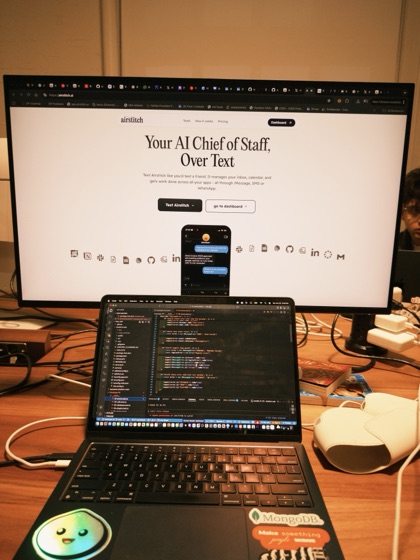 Airstitch (acquired) - an AI chief of staff inside iMessage, SMS, and WhatsApp. 200+ users and 20 paying customers in nine days. The interesting part was underneath: instead of paying per-message API fees, we built our own agent runtime on remote Mac servers with an iPhone as a relay, and gave each agent a headless browser for booking and form-filling. That meant keeping long-lived agent machines alive and recoverable for real users, an early taste of the environment problem Drums works on now. I ran persistent agent machines in production before that was a product category. Built at Founders Inc (Artifact'26).
HomePlate - co-founder and CTO. Medical meal delivery for seniors: licensed senior kitchens turned into on-demand, medically-tailored meal prep for people whose chronic illness dictates what they can eat. Ran 10 pilots and generated $4k in early revenue, later covered by Fox 5.
Barty - an AI recruiter that screened candidates and ran interview workflows. Won $8,000 at George Mason's Patriot Pitch but never found a market. It taught me far more about sales than recruiting - the gap between loving a demo and paying for it - which is how I built Airstitch.
Earlier work
NSF wearables research (George Mason) - lead ML engineer. Built the pipeline for spotting early cognitive decline from how people move, using wearable sensor data. 94% accuracy, 500+ participants. Talk at NARRTC 2026.
Cerebras - engineering fellow. Built AI agents on their inference chips.
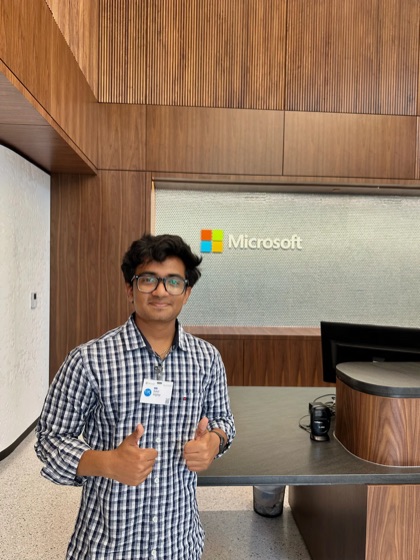 Microsoft - student researcher with Azure Space. Built ML pipelines over satellite radar data for environmental monitoring, then moved down the stack: post-training runs, GPU scheduling, and the training infrastructure underneath them. First time I watched a job die because the cluster, not the code, gave out.
Trigent - software engineer, infra. Built a computer-vision system for FDA-regulated medical imaging and a HIPAA-compliant pipeline for 200K+ patient records. On the infrastructure side: hosting, code-execution sandboxes, and RL and training environments, plus 24 virtual desktops I ran for their internal team. This is where I first kept a fleet of machines alive that other people worked on every day, and learned how much of that job is state you can't afford to lose.
Zepto - I did delivery runs in India myself to learn last-mile logistics first-hand instead of from a dashboard. Found 3 friction points each costing 15+ minutes a delivery.
A NYC startup - fixed a production bug that had stalled their revenue. They recovered.
Open source beyond AgentBudget: contributions to computer-use agents Cua and Simular Agent S (write-up, write-up), plus Superset, OpenCode, Better Auth, LangChain, Supabase, LangFuse, and Scribe, plus a hackathon-winning swimmer-tracking model that used only motion sensors - no GPS, no cameras (Devpost).
Recognition
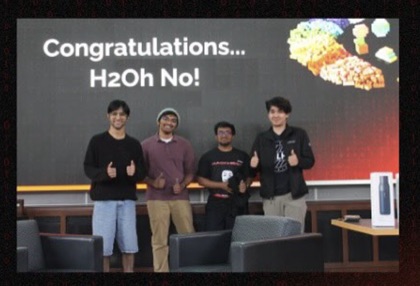
Won HackMIT, HackPrinceton, and PennApps (2023 & 2024) out of 30+ hackathons. Patriot Pitch 1st place ($8K). Mason Distinction Award ($84K scholarship). Part of Founders Inc Artifact'26 and NVIDIA Inception.
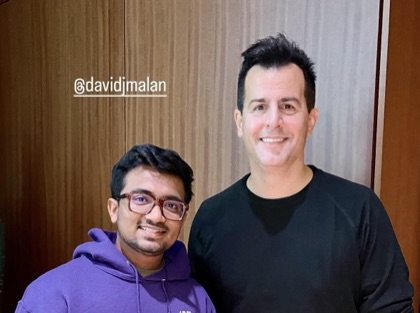 I've judged hackathons at NASA TechRise, Technica, UVA HooHacks, and UMD Bitcamp, and I ran George Mason's Data Science & Computation Society - grew it from under 30 members to 500+.
CS @ George Mason University · GitHub · LinkedIn · X · Email · AgentBudget
Side experiments
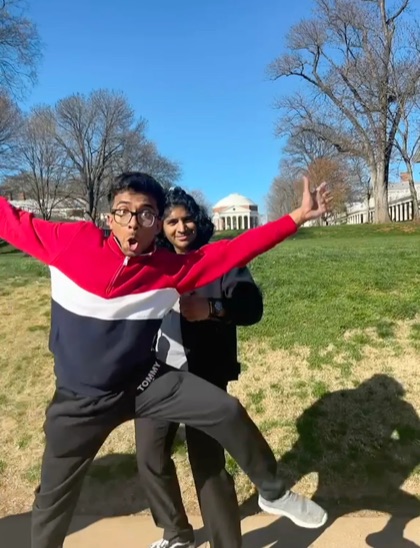
Various side experiments, including an ill-fated attempt at a clothing brand. Sometimes you just have to see what happens.
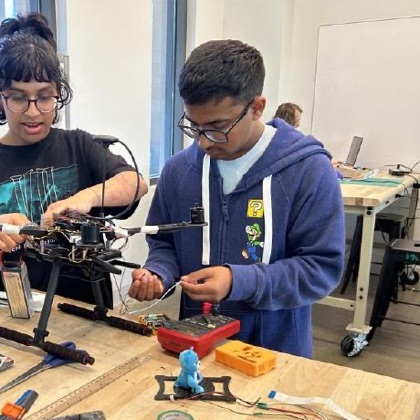 Hardware and drones - before it was all software I built UAVs at George Mason's MIX lab: mechanical build, microcontrollers, flight dynamics, and a Raspberry Pi 4 camera rig doing live video sensing in the air. Same appetite for making a machine do a thing, different machine. Badge.